
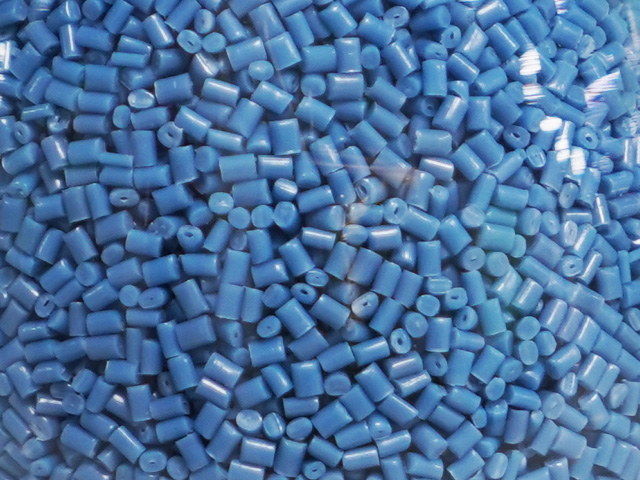
Low MFI, High Performance: Why Melt Flow Index is the True Benchmark for Recycled Plastic Quality
Specialized in RHDPE/ HDPE Granules for Global Markets | Plastic Raw Material Supplier at Hebei ReMei Polymer Material CO.,LTD
2025年9月25日
(Word Count: ~1100)
If you're sourcing recycled plastics, your initial questions likely revolve around price, color, and availability. These are crucial, of course. But there's a more fundamental, often overlooked technical parameter that silently dictates whether a recycled material can perform in demanding applications—or fail spectacularly. This parameter is the Melt Flow Index (MFI or MFR).
At Remei Polymer, our philosophy is built on “Think sustainably. Shape the future” This is more than a tagline; it's our engineering creed. True sustainability isn’t just about diverting waste from landfills. It’s about “Less waste. More value” through sophisticated technology—transforming post-consumer plastic into an engineering-grade material capable of competing with, and even replacing, virgin polymers. And this transformation hinges on a deep understanding of MFI.
Here is the critical insight: MFI has a direct and powerful correlation to mechanical properties.
Longer polymer chains (low MFI) can entangle more effectively, creating a tougher, more robust network. This translates directly into:
Higher Impact Strength & Toughness: The final product is more resistant to cracking and breaking.
Better Creep Resistance: The material better maintains its shape under a continuous load over time—a vital property for pipes or load-bearing components.
Enhanced ESCR (Environmental Stress Crack Resistance): Essential for containers holding chemicals or for outdoor applications.
Therefore, for structural applications, durability, and high-performance uses, a low MFI is often the primary target. It’s the difference between a material that is merely formed and one that is engineered to last.
Part 2: The Recycled Plastic Challenge: The MFI Reality
Now, let’s address the central challenge with recycled plastics.
Every time plastic is heated and processed (e.g., in an extruder or injection molding machine), it undergoes thermo-mechanical degradation. This process causes the polymer chains to break, reducing the average molecular weight. Consequently, compared to its virgin counterpart, recycled material will naturally have a higher MFI and lower mechanical strength.
This is why many lower-grade recycled materials are often relegated to "down-cycling" into applications with minimal strength requirements. While this is better than landfilling, it falls short of the "value enhancement" that a true circular economy demands.
So, is it possible to produce recycled plastic with a low MFI? The answer is a resounding yes, but it requires expertise, technology, and precision.
At Remei Polymer, we treat MFI as a core quality parameter. We address the degradation challenge through a meticulously controlled process:
1.Rigorous Feedstock Sorting & Pre-processing: Purity is the foundation. Our advanced sorting technologies ensure a homogeneous stream of material, preventing contamination from other polymer types which can unpredictably alter MFI.
2.Precision Washing: Thorough removal of contaminants is critical, as impurities can act as catalysts for further degradation during processing.
3.Optimized Pelletization: This is where our expertise shines. We meticulously control temperature, shear force, and residence time to minimize additional damage to the polymer chains.
Through these efforts, we achieve stable and competitive MFI values:
- Our standard recycled pellets maintain a consistent MFI of approximately 1 g/10min, suitable for a wide range of injection molding applications.
- However, our true technical pride lies in our specialty grades engineered for high-performance applications.
Part 3: A Case in Point: Black Recycled Pellets for Pipe Applications at MFI ≈ 0.3 g/10min
Let's talk numbers—the universal language of engineering.
Our black recycled pellets, specifically engineered for pipe systems, achieve an MFI optimized to an impressive 0.3 g/10min.
Why is this number so significant?
Because it places our recycled material in the same performance league as high-quality virgin pipe-grade materials, which typically have an MFI of 0.1g-0.2g/10min.
Pipe applications are the ultimate proving ground for material performance. They must withstand internal pressure, external soil loads, and long-term environmental stress. The high molecular weight, strength, and creep resistance indicated by a low MFI are non-negotiable.
When our clients choose these pellets, they aren't just selecting a "green" option. They are selecting a reliable, performance-driven, and technically validated material capable of meeting the rigorous demands of pipe manufacturing. This is no longer just recycling; this is true value enhancement and upcycling. We have successfully elevated post-consumer waste back into the realm of engineering-grade polymers.
Conclusion: Partnering to Shape a High-Performance Future
The journey towards a circular economy starts with choosing recycled materials. But it accelerates by choosing the right, high-quality recycled materials.
The next time you evaluate a recycled polymer supplier, look beyond the price and color. Ask for the Melt Flow Index data sheet. Shift the conversation to: "What is the MFI of this grade, and how is it optimized for my application?"
At Remei Polymer, we welcome these technical discussions. We believe that by demonstrating hard metrics like low MFI, we can collectively shatter the perception that "recycled" means "inferior." We can help inject real, quantifiable sustainability into your products.
Let's move beyond surface-level green marketing and delve into the core of material science. Let's use expert “Green Thinking” to select high-performance recycled materials and, together, “Shape a Future” that is not only greener but also stronger and more durable for your products and our planet.
What has been your experience using MFI in material selection? What challenges have you faced when specifying recycled content for demanding applications? Share your thoughts in the comments below!
To request a technical data sheet for our pipe-grade pellets or other specialized materials, please send us a direct message.
If you found this article valuable, please like, comment, or repost to help your network learn more about the science behind sustainable materials.

Leave a reply